Services / Christian therapy
Your spiritual life is not a separate appointment.
What would it feel like to have your faith understood as part of the whole picture? For many people, their faith is the ground from which they understand love, suffering, purpose, responsibility, forgiveness, and belonging. It informs the choices they make, the relationships they tend, and the life they hope to live. I offer depth-oriented, faith-integrated therapy in Newport Beach and Fullerton, and by telehealth throughout California.
Schedule a free consultation →The premise
An invitation to bring your faith into the room.
There are parts of life that are hard to put into words: the strain in a relationship, the anger underneath grief, the uncertainty that lingers after a decision, the guilt that surfaces without a clear cause, the longing to feel more connected to yourself and the people you love.
When faith is part of how you understand your life, these experiences rarely stay separate from it. Questions of responsibility, forgiveness, hope, desire, loss, and belonging are woven through your spiritual life, not set apart from it. So when you invite someone in to help, it matters that they can understand the values and the worldview your life is built on.
Therapy can be a place to look at these things with someone who respects and understands what shapes them. You do not have to make your faith the focus of every conversation, and you do not have to leave it at the door. Together, we can linger with what hurts, what matters, and what is asking to be understood more deeply.
Who I work with
For people whose faith is integral to their life and story.
You may be carrying anxiety, habits, relationship patterns, or decisions that do not feel consistent with the life you want to live. You are not looking for someone to tell you what to believe. You want space to understand what is getting in the way and to make changes that feel honest, grounded, and connected to your values.
Something important has shifted in a marriage, family, friendship, or church community. You may feel hurt, disappointed, resentful, or unsure how to speak honestly without losing connection. Together, we can make room for the complexity of love, forgiveness, boundaries, responsibility, and repair.
You hold your faith deeply while finding that life no longer fits as neatly into the answers you once had. Your questions and wrestling are not a rejection of your faith; they may be an invitation to engage more deeply and honestly with the life you are actually living.
You may be in a position of leadership, competent and dependable in the roles you hold, while privately feeling overwhelmed, disconnected, restless, or depressed. Therapy can be a place to bring what has been difficult to talk about without having to minimize it, explain your faith from the beginning, or have everything figured out first.
The work
Attention, not advice.
There are some questions no one else can answer for you. Questions of love, responsibility, loss, calling, and what faithfulness asks in a particular season of life are not solved by receiving the right advice. Therapy can offer another kind of space: one where we slow down enough to notice what is happening beneath the surface. Your faith is invited and present in the room because it is already part of how you make meaning, carry responsibility, and imagine a way forward.
Often, the work begins with something small. A resentment you have brushed aside. A fear that appears whenever you disappoint someone. A recurring sense of obligation, or the realization that it has become difficult to tell the difference between love, fear, guilt, and duty. Sometimes it means looking more closely at a relationship, a decision, a sense of loneliness, or a role you have held for so long that you no longer know where it ends and you begin.
Depth work does not rush toward a conclusion. It gives us time to understand what is beneath the first explanation. As we do, distinctions often become clearer: between generosity and overextension, anxiety that confirms what you already fear and the fear that can arise when healing asks something new of you, love and obligation, forgiveness and avoiding what is painful to face.
The hope is not that therapy will provide certainty where life does not. It is that, through careful attention, you may become freer to discern, to love, to receive your own life more honestly, and to respond with greater sturdiness and integrity to what is in front of you.
More on how I work.
A helpful distinction
Therapy can include faith without becoming spiritual direction.
Your relationship with God is connected to your history, relationships, longings, losses, and hopes. In therapy, we can attend to how these parts of your life meet, without reducing faith to psychology or turning therapy into a place for advice.
Spiritual direction has a different focus: your relationship with God and the movement of your spiritual life. Therapy focuses on you: your story, emotions, relationships, and the patterns that shape how you experience your life and what feels possible. I am trained in both areas and hold a master’s degree in Spiritual Formation and Soul Care from Talbot School of Theology, and if spiritual direction would be helpful alongside therapy, I can connect you with a trusted referral.
Background
You should not have to leave
faith outside the room.
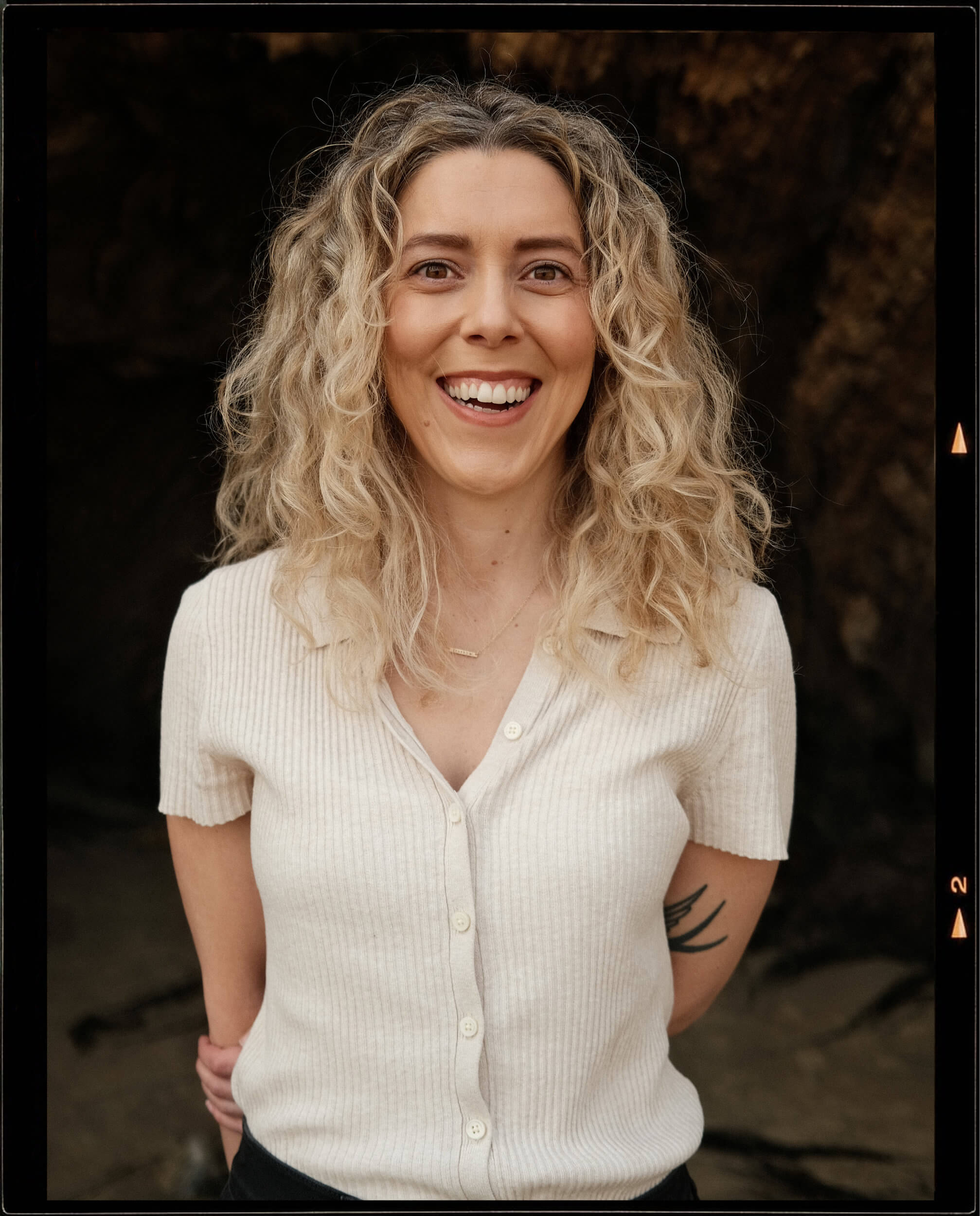
You’re probably on this page because faith is not an add-on to the rest of life. It shapes how you understand love, calling, suffering, responsibility, hope, and what it means to become more fully yourself. I bring an MA in Spiritual Formation and Soul Care from Talbot School of Theology, as well as training in spiritual direction. That background means your faith and values do not have to be translated or defended in order to be taken seriously.
I also bring a depth-oriented clinical approach, informed by ongoing postgraduate psychoanalytic training at the Newport Psychoanalytic Institute. That combination allows me to meet the spiritual and psychological dimensions of your life without positioning one versus the other. We can speak openly about faith, prayer, calling, doubt, suffering, relationships, and the patterns that shape how you experience them.
About Nikole →Faith-integrated therapy
Frequently asked questions
Are you a Christian therapist?
My training includes an M.A. in Spiritual Formation and Soul Care from Talbot School of Theology, so the Christian tradition is familiar territory and you will not need to translate it for me. I work with people across and outside that tradition. What matters clinically is that your spiritual life is real to you and belongs in the room, not that we hold the same positions.
Will we pray together in session?
No. Some practices do this and it can be meaningful for the right person with the right clinician. It is not part of my work. Prayer inside a therapeutic relationship introduces an authority dynamic into a room where we are often examining exactly that, and I would rather keep the hour clear for a different kind of attention.
How is this different from spiritual direction?
Spiritual direction attends to your relationship with God and treats that relationship as the subject. Therapy attends to you: your history, your patterns, and the reasons you are the particular person having that relationship in the way you are. Many people find the two work well alongside each other, and I am glad to work with someone who already has a director.
My faith has gone flat and I do not know if that is a spiritual problem or depression. Which is it?
Sometimes both, and I would rather take time with the distinction than settle it quickly. Spiritual dryness has a long history in the contemplative tradition and is not in itself a clinical condition. Depression is, and it can also present as a loss of meaning that looks spiritual from the inside. Part of early work is getting a careful look at what is actually going on rather than assuming.
Do you work with pastors and people in vocational ministry?
Yes. When work, faith, community, and income all sit in the same place, there is often nowhere to say the honest thing. Sessions are confidential and are not shared with your church, your board, or your denomination.
What if part of my spiritual history is painful rather than sustaining?
That is common and it belongs here too. Faith is rarely all one thing. If the harder material turns out to be the larger part of the picture, you may find the page on religious trauma therapy is closer to where you are, and either way we can work with both.
Do you take insurance?
I am a private-pay practice. Many clients use out-of-network benefits through a PPO plan, and I provide a monthly superbill you can submit for reimbursement. I also accept HSA and FSA cards.
A companion path
If what you are carrying is heavier than this.
Faith is rarely all one thing. Some of what you were given sustains you and some of it may have cost you something, and those can be true in the same person on the same Sunday.
If the harder part is the larger part right now, therapy for religious trauma is where that work is described. It is the same practice and the same clinician. You do not need to have sorted out which page you belong on before you call, and most people do not arrive knowing.
Next steps
Bring the whole thing. Let’s talk.
The free 15-minute phone call is a chance to see whether this feels right. In-person in Newport Beach and Fullerton, or telehealth throughout California.
Schedule a free consultation →